The decision about where to have dental implant surgery is one patients often make without asking the right questions. Price, proximity, and the persuasiveness of a clinic’s marketing tend to drive choices that should actually be driven by clinical safety, surgeon qualification, and facility standards.
In India, one meaningful signal to look for — alongside several others — is NABH accreditation. Understanding what it means, and what it does not tell you on its own, helps patients make a decision based on something more substantive than a website claim.
What NABH Accreditation Actually Represents
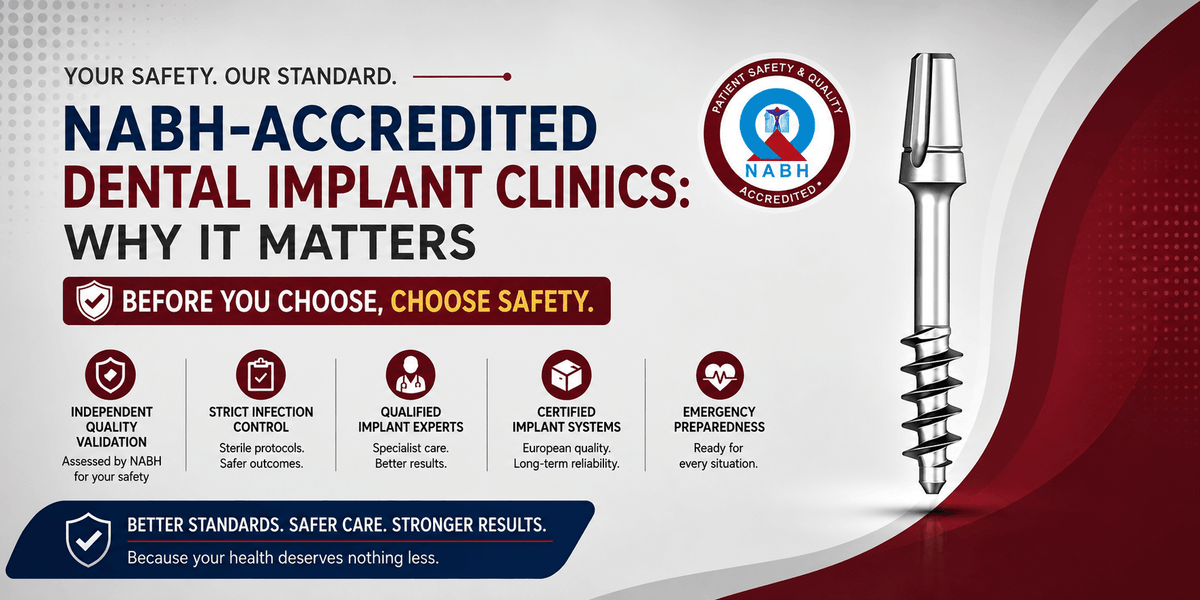
NABH stands for the National Accreditation Board for Hospitals and Healthcare Providers, operating under the Quality Council of India. It assesses healthcare facilities against defined standards covering patient safety protocols, infection control procedures, clinical records management, staff credentialing, equipment maintenance, and emergency preparedness.
An accredited facility has been evaluated against these standards by an independent body. This is meaningful because it shifts quality assurance from the clinic’s self-declaration to external validation. The accreditation does not guarantee every outcome, but it indicates the facility takes clinical governance seriously enough to invite inspection.
Why It Matters Specifically for Implant Surgery
Dental implant surgery is a surgical procedure — not a standard dental treatment. It involves penetrating bone, working in a sterile surgical field, and managing post-operative healing. In facilities without proper sterilisation protocols, infection control standards, or surgical monitoring capability, the risks associated with any surgical procedure increase significantly.
The dental implant market in India includes a wide range of providers — from specialist clinics with full surgical infrastructure to commercial centres operating with minimal oversight. The gap in patient outcomes between these categories can be significant. NABH accreditation is one way to identify that a facility has met at least a defined minimum standard.
What Patients Should Check Beyond Accreditation
Accreditation is a useful signal, not the entire picture. When evaluating a dental implant clinic in Delhi or across NCR, patients should additionally verify:
- The treating surgeon’s specific training in implantology — not just that the clinic offers implants
- Which implant brand and country of manufacture is being used — implant quality varies significantly across price points
- Whether 3D CBCT scanning is used for treatment planning, or whether implants are placed based on 2D X-rays only
- The clinic’s process for managing complications after surgery — who to call, what the follow-up protocol is
- Whether the treatment plan includes an honest discussion of risks, alternatives, and realistic outcome expectations
The Patient’s Responsibility in the Decision
Safe implant outcomes are a shared responsibility. Patients who take time to evaluate the facility and surgeon, ask questions about what is included in the treatment plan, and follow post-operative instructions carefully are in a meaningfully stronger position than those who choose based on cost alone.
Dental implants are a long-term investment in oral health and daily function. The clinic and surgeon selected at the outset shape outcomes for years — sometimes decades. The additional effort invested in due diligence at this stage is rarely wasted.
Frequently Asked Questions
Q: How do I check if a dental clinic in Delhi NCR is NABH accredited?
NABH maintains a publicly accessible directory of accredited healthcare facilities on its website. You can search by facility name or location to confirm accreditation status and scope.
Q: Does NABH accreditation guarantee a good implant outcome?
No. Accreditation indicates that the facility meets defined quality standards. Individual treatment outcomes depend on the surgeon’s expertise, the patient’s bone condition and health, the implant system used, and post-treatment maintenance — factors that accreditation does not individually address.
Q: What implant brands should patients look for?
Implants from established European manufacturers with CE marking and ISO certification have well-documented biocompatibility and manufacturing quality standards. Ask the clinic specifically which brand they use and where it is manufactured before agreeing to treatment.
Q: Is a CBCT scan always necessary before getting implants?
For most implant cases — and certainly for complex cases involving bone loss — a CBCT 3D scan is considered the standard of care for treatment planning. Clinics that plan implant placement from 2D X-rays alone are working with significantly less information about the surgical site.
Book a consultation at the Simpladent clinic in Kaushambi, Ghaziabad — a focused implant care centre committed to transparent treatment planning, 3D diagnostics, and clinically responsible patient communication.
Disclaimer: This article is for general health awareness only. A formal diagnostic evaluation by a registered dental surgeon is required before any treatment decision is made.