Pyorrhea — the common term for advanced periodontal (gum) disease — is one of the most prevalent causes of tooth loss in India. It is also one of the most common oral conditions patients bring into an implant consultation, along with the understandable question: “I’ve already lost teeth to gum disease. Can I still get dental implants?”
The clinical answer is: in many cases, yes — but only after active gum disease has been treated and stabilised, with specific precautions in place for the long term. Proceeding with implants while gum disease remains active is not responsible care. Understanding what needs to happen first — and what is expected of you afterward — is what this article addresses.
What Periodontal Disease Does to the Jawbone
Periodontal disease destroys the supporting structures of teeth — specifically the gum tissue and bone that anchor each tooth in its socket. In its early stage (gingivitis), the damage is limited to soft tissue and reversible. In advanced stages (periodontitis, or pyorrhea), irreversible bone loss occurs around the affected teeth.
This bone loss has direct clinical implications for implant planning. The pockets left behind by periodontal disease often result in irregular, reduced bone architecture at the sites where implants would need to be placed. The extent and distribution of that bone loss is mapped during the pre-implant assessment.
Why Active Gum Disease Must Be Resolved First
Placing implants in a mouth with active, untreated periodontal infection is clinically inappropriate. The same bacterial biofilm responsible for destroying bone around natural teeth is capable of causing peri-implantitis — an infection around implants with a very similar mechanism and consequence. This condition is even more prevalent in cases where conventional implants are placed, making the success of dental implant treatment even more challenging.
Before implant treatment begins, every site of active disease must be professionally treated and the infection eliminated. This means scaling, root planning, and where necessary, surgical periodontal treatment. After treatment, a healing period and reassessment are required to confirm that the disease has genuinely been controlled — not just temporarily masked.
What Periodontal Treatment Does and Does Not Achieve
Treating periodontal disease halts further bone destruction. It does not regenerate bone already lost. This is an important distinction. Patients who have had active gum disease controlled may still be left with significant bone deficits at multiple sites — deficits that must be factored into the implant plan.
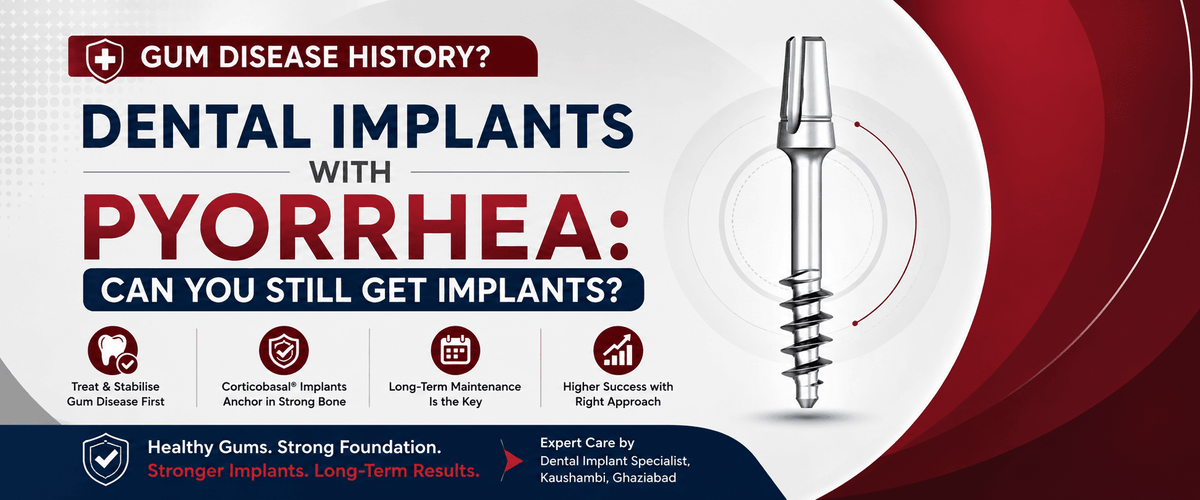
For patients in Ghaziabad and Delhi NCR with this bone loss history, Corticobasal® or basal implant techniques may offer a pathway in suitable cases — anchoring in the deeper cortical and basal bone that periodontal disease does not typically reach, bypassing the compromised crestal layer. This is evaluated case by case using 3D imaging.
Long-Term Maintenance: The Non-Negotiable Requirement
Patients with a history of periodontal disease who receive implants carry a higher lifetime risk of peri-implantitis than the general implant population. This risk does not disappear after treatment is completed. It requires active, ongoing management.
Professional maintenance appointments — typically every three to four months in the first few years — are the standard of care for this patient group. Combined with meticulous daily cleaning using appropriate tools (interdental brushes, water flossers), this maintenance approach is what separates patients who maintain their implants long term from those who experience complications.
Honest Pre-Treatment Communication
Any responsible implant team will have a frank conversation with periodontal disease patients before treatment begins: about the elevated risk, about what maintenance involves, and about what signs of peri-implantitis to watch for. This is informed consent, and it is not discouragement. Patients who understand their risk profile are those best equipped to manage it.
Corticobasal® implants have for decades been the best rescue option for patients with periodontitis. Consult a Corticobasal® implant expert at Simpladent clinics to understand if you are an ideal candidate.
Frequently Asked Questions
Q: Can I get dental implants if I still have gum disease?
Not while gum disease is active. Active periodontal infection is a direct contraindication to implant placement. Treatment and stabilisation of gum disease must be completed and confirmed before implant planning proceeds.
Q: How long after gum disease treatment can I get implants?
The timeline varies depending on the severity of the disease and the extent of treatment required. After active infection is resolved, a period of healing and reassessment — often three to six months — is typically recommended before implant planning begins.
Q: What is peri-implantitis, and how is it different from gum disease?
Peri-implantitis is an infection affecting the soft and hard tissues surrounding a dental implant, similar in mechanism to periodontal disease around natural teeth. It causes bone loss around the implant and can lead to implant failure if not detected and treated early.
Q: If I had pyorrhea, does that mean my implants will fail?
Not necessarily. With properly treated gum disease, appropriate implant selection, and committed long-term maintenance, many patients with a periodontal history achieve good implant outcomes. The key is managing the elevated risk proactively, not assuming failure is inevitable.
If you have a history of gum disease and are considering dental implants, plan your consultation with Dr. Vivek Gaur at Simpladent, Kaushambi, Ghaziabad. A full clinical evaluation will determine what treatment is appropriate and in what sequence.
Disclaimer: This article is for general health awareness only. A formal diagnostic evaluation by a registered dental surgeon is required before any treatment decision is made.