A patient in their 70s walks into an implant consultation expecting to be told they are too old. It is a preformed assumption that many seniors carry — and one that is frequently reinforced by general dentists who are not specialists in advanced implantology.
The clinical reality is more nuanced. Age itself is not a contraindication for dental implants. What matters is not the number on a birth certificate but the condition of the bone, the status of systemic health, and the capacity to maintain implants over the long term. An otherwise healthy 72-year-old with reasonable cortical bone may be a far better implant candidate than a 50-year-old with uncontrolled systemic disease.
The Real Impact of Missing Teeth on Older Patients
Tooth loss affects older patients on several levels at once. Nutritional intake is directly compromised — patients who cannot chew adequately tend to avoid hard vegetables, certain proteins, and other foods that require intact dentition. Over time this creates nutritional gaps that compound other age-related health challenges.
Removable dentures, the traditional solution, carry their own ongoing burden: sore spots, slipping during meals or speech, bone loss under the denture base, and the daily management of removing and cleaning them. For many senior patients, the shift from loose or uncomfortable dentures to fixed implant-supported teeth represents a fundamental change in daily quality of life.
Why Conventional Implants Are Often Impractical for Older Patients
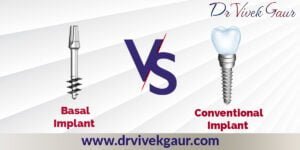
Older patients commonly present with the specific clinical challenge that makes conventional implants difficult: years of denture wear have caused significant crestal bone resorption. The bone that conventional implants need is exactly what has been lost over the preceding decades. Conventional dental implant patients need to wait a minimum of 3 to 9 months to fully get a permanent set of teeth ( prosthesis) considering the long healing period involved.
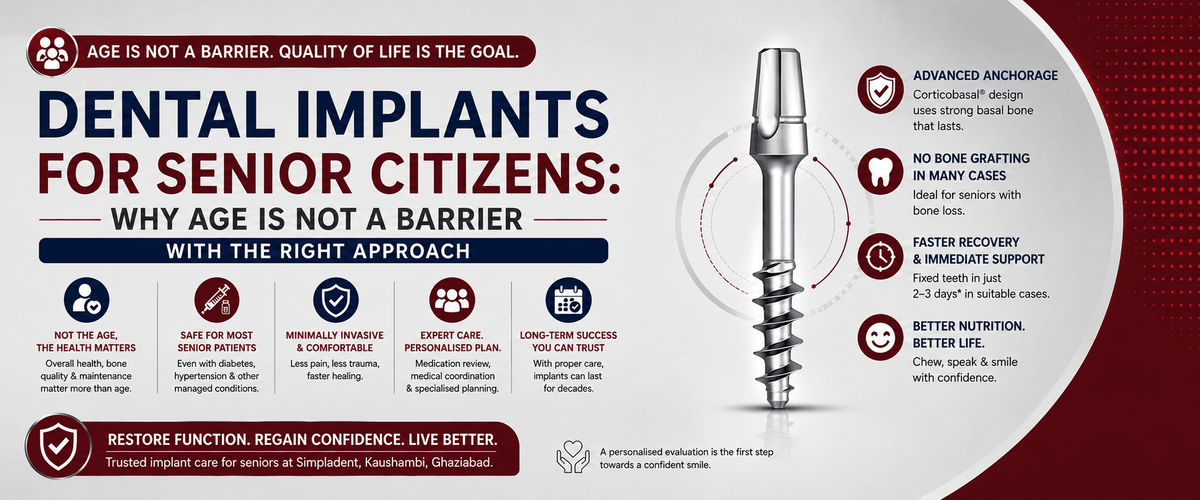
This is where the Simpladent approach and Corticobasal® implant technology offer particular clinical value for older patients. By anchoring in the basal and cortical bone that remains relatively preserved even in aged jaws, this approach can provide implant placement in patients who would otherwise be directed to bone grafting — a process that is longer, more demanding, and carries higher risk for elderly patients.
What Makes Treatment Different for Older Patients
The surgical procedure itself benefits from being as minimally invasive as possible in elderly patients. Where flapless or small-incision techniques can be used, they reduce tissue trauma, post-operative discomfort, and recovery time — all of which matter more as physiological reserve decreases with age.
Medications are a significant consideration. Blood thinners, bisphosphonates for osteoporosis, antihypertensives, and many other commonly prescribed medications in this age group can affect implant surgery. The treating team must review the patient’s full medication list and, where necessary, coordinate with their physician before surgical planning proceeds.
Systemic Conditions Are Manageable, Not Automatic Disqualifiers
Conditions like hypertension, managed heart disease, type 2 diabetes, and osteoporosis are extremely common in patients above 60. None of these is an automatic barrier to implant treatment. Each is a variable that must be factored into the surgical plan, anaesthetic protocol, and healing expectation — but with appropriate specialist management, they are manageable rather than prohibitive.
The evaluation process at Dr. Vivek Gaur’s clinic in Kaushambi, Ghaziabad covers exactly these factors. For senior patients, the consultation involves a more thorough medical history review and, where relevant, communication with the patient’s physician before any treatment plan is confirmed. This is what responsible, patient-specific care looks like for this age group.
Frequently Asked Questions
Q: Is there a maximum age for getting dental implants?
There is no absolute upper age limit for dental implants. What matters is the condition of the bone, the patient’s overall health, and their capacity for post-operative healing and maintenance. Individual assessment determines eligibility, not age alone.
Q: Are dental implants safe for patients with heart conditions?
Many patients with managed heart conditions can receive dental implants with appropriate pre-surgical planning and medical coordination. The treating team will need full details of your condition and medications. Uncontrolled or unstable cardiac conditions would require medical stabilisation first.
Q: What about patients taking bisphosphonates for osteoporosis?
Bisphosphonates, particularly intravenous forms, can affect bone healing and require specific consideration before implant surgery. Oral bisphosphonates at low doses are generally lower risk, but must still be disclosed. Your surgeon will assess the risk in the context of your specific medication and duration of use.
Q: How long do implants typically last in elderly patients?
Implant longevity depends on oral hygiene, maintenance commitment, and systemic health — not age alone. Patients above 60 who maintain their implants well achieve long-term outcomes comparable to younger patients in many cases. Results and timelines vary by individual.
Discuss your dental implant options with Dr. Vivek Gaur at the Simpladent clinic, Kaushambi, Ghaziabad. Senior patients receive a personalised evaluation that accounts for medical history, bone condition, and medication review.
Disclaimer: This article is for general health awareness only. A formal diagnostic evaluation by a registered dental surgeon is required before any treatment decision is made. Patients with systemic health conditions should consult their physician alongside their dental evaluation.